
 English
 Español
 Portugues
 Français
 العربية
 ไทย
ไทย Türk dili
 Indonesia
 Tiếng Việt


Low Voltage Conductor
Найдите {ключевое слово} Оптовые и кавычки из Китая. Мы являемся профессиональным производителем {Keyword} Компании, Фабрики и экспортеров, специализирующиеся на {ключевом слова} с высоким качеством.
продукт
классификация:
-
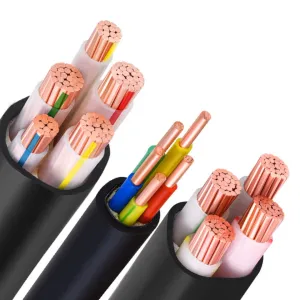
Cu XLPE PVC Copper Power Cable 4X95mm2-4X300 0.6/1kv Low Voltage Pure Copper Conductor
Их классификация: Кабель низкого напряжениямнения: 357номер:Время выпуска: 2025-07-28 05:43:41This product is a low-voltage pure copper conductor cable, with specifications ranging from 4X95mm² to 4X300mm² and a rated voltage of 0.6/1kV, suitable for low-voltage power transmission scenarios. The core of the cable uses pure copper conductors, which have excellent electrical conductivity and thermal conductivity, low resistance loss, and can transmit electricity efficiently. Meanwhile, they have good mechanical strength and corrosion resistance, extending the service life of the cable. The insulation layer is made of cross-linked polyethylene (XLPE). This material features resistance to high and low temperatures, chemical corrosion, and stable insulation performance. It can work continuously in an environment of -40℃ to 90℃ and has strong anti-aging properties, effectively ensuring the safety of power transmission. The sheath is made of polyvinyl chloride (PVC), which has good wear resistance, weather resistance, and flame retardancy. It can provide reliable protection for the internal structure of the cable, resisting external mechanical damage, moisture, and chemical erosion. It is suitable for various indoor and outdoor laying environments, such as building power distribution and industrial equipment power supply. The overall design complies with low-voltage power transmission standards. The multi-core structure (4 cores) meets common power consumption needs such as three-phase four-wire systems. Different cross-sectional area specifications can adapt to power transmission requirements of different powers, providing stable and safe power connection solutions for various low-voltage power consumption scenarios. -
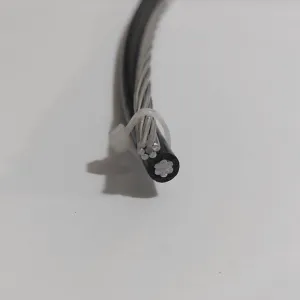
XLPE Insulated ABC Cable Low Voltage Aerial Bundled Aluminum Conductor for Service Drop & Overhead Lines (4 Core, 16mm² to 95mm²)
Их классификация: Верхние изолированные линии проводамнения: 260номер:Время выпуска: 2025-08-27 07:25:40The XLPE Insulated Low Voltage Aerial Bundled Cable (ABC) with Aluminum Conductor is a power transmission product specially designed for service drop and overhead line scenarios. It adopts a 4-core structure, aluminum conductors with specifications ranging from 16mm² to 95mm², and cross-linked polyethylene (XLPE) insulation layer. With high adaptability, durability, and cost-effectiveness, it has become a core choice in low-voltage distribution networks for connecting the main power grid lines to end-users and constructing overhead transmission lines. It is widely used in urban and rural residential power supply, commercial premises power distribution, and power transmission in small industrial areas. In terms of the product's core characteristics, the XLPE insulation layer is the key to ensuring performance. After special processing, the cross-linked polyethylene material forms a three-dimensional network molecular structure, which has excellent electrical insulation performance. It can stably withstand voltage impacts in low-voltage power supply environments, effectively isolate the conductor from the external environment, reduce the risk of leakage and short circuits, and ensure electricity safety. At the same time, the XLPE material has outstanding high-temperature resistance and aging resistance, and can work stably in the temperature range of -40℃ to 90℃. Even if it is exposed to harsh outdoor environments such as sunlight, rain, and strong ultraviolet rays for a long time, it is not prone to problems such as insulation layer cracking and softening, which greatly extends the service life of the cable and reduces later maintenance costs. This is especially suitable for the long-term outdoor operation needs of service drops and overhead lines. The 4-core structure design accurately meets the requirements of the three-phase four-wire system in low-voltage distribution systems, including three phase conductors and one neutral conductor. There is no need to lay additional neutral cables, which simplifies the line layout. This design not only reduces construction links and material investment but also ensures balanced current transmission in the three-phase circuit, avoiding voltage fluctuations caused by the lack of a neutral conductor or improper configuration, and ensuring the stable operation of end-users' electrical equipment. It can be efficiently adapted to both single-phase power distribution for residential service drops and three-phase power supply for overhead lines. Aluminum is used for the conductor, and five specifications are available: 16mm², 35mm², 50mm², 70mm², and 95mm², covering different power load scenarios. The density of aluminum conductor is only about one-third of that of copper, making the overall weight of the cable lighter. During overhead installation, it can reduce the load-bearing requirements on poles and towers, and lower the construction cost of poles and towers. At the same time, the raw material cost of aluminum is lower, which can effectively control the overall cost of the project, meeting the economic needs of large-scale distribution projects. Different cross-sectional specifications correspond to different application scenarios: the 16mm² specification has a moderate current-carrying capacity, suitable for service drops of rural individual households with low power load or overhead branch lines in small villages; the 35mm² to 50mm² specifications are suitable for service drops and overhead lines in medium-load scenarios such as urban residential areas and street shops; the 70mm² to 95mm² specifications have strong current-carrying capacity, which can meet the power transmission needs of high-load areas such as large residential communities and small industrial parks, realizing flexible configuration of "selecting specifications according to needs". In terms of application scenario adaptability, the cable has been optimized for the characteristics of service drops and overhead lines. As a service drop, its lightweight feature facilitates laying from the overhead main line to the user's building, reducing the difficulty of wall-penetrating and span laying. As an overhead line, its bundled structure avoids the problem that traditional bare wires are prone to faults caused by tree shading and bird nesting, reduces the line fault rate, and improves power supply reliability. In addition, the cable also has a certain degree of mechanical strength, which can resist the impact of natural factors such as outdoor wind and ice, ensuring stable power supply even under complex weather conditions and providing strong support for the safe and efficient operation of the low-voltage distribution network. In conclusion, the XLPE Insulated Low Voltage Aerial Bundled Cable (4-core, 16mm² to 95mm²) with Aluminum Conductor perfectly adapts to the usage needs of service drops and overhead lines through precise design of material, structure, and specifications. It not only ensures the safety and stability of power transmission but also takes into account economy and construction convenience. It has irreplaceable practical value in promoting the upgrading of low-voltage distribution infrastructure and ensuring residential electricity use, commercial and industrial power supply. -
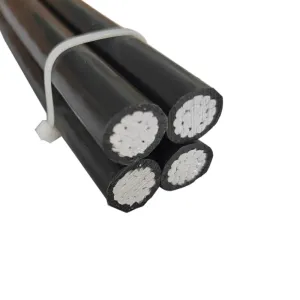
Low Voltage Aerial Bundled Cable (ABC) - XLPE Insulated Aluminum Conductor
Их классификация: Верхние изолированные линии проводамнения: 328номер:Время выпуска: 2025-09-01 09:18:20In the construction of low-voltage power distribution networks, especially in overhead line laying scenarios, the safety, transmission efficiency, and environmental adaptability of cables directly determine the stability of power grid operation and operation and maintenance costs. The Low Voltage Aerial Bundled Cable (ABC), with XLPE (cross-linked polyethylene) insulation material and aluminum conductor as its core configuration, has become a preferred solution in the low-voltage power distribution field due to its unique bundled structure design. It is widely used in urban distribution network branches, rural power grid transformation, low-voltage power supply in industrial parks, and other scenarios, providing a reliable guarantee for the "last mile" transmission of electricity from the district transformer to end-users. From the perspective of core materials, "XLPE insulation" is the key to the safety and durability of this cable. Compared with traditional PVC insulation, XLPE material has a restructured molecular structure through cross-linking technology, with significant advantages: First, it has excellent temperature resistance, with a long-term working temperature of 90℃ and a maximum short-circuit temperature resistance of 250℃. In the case of high-temperature exposure in summer or short-term overload of the line, there will be no insulation softening or cracking, effectively avoiding leakage or short-circuit risks, and adapting to the common load fluctuation scenarios in low-voltage power distribution. Second, it has high insulation resistance and low dielectric loss, which can greatly reduce the leakage loss during power transmission. Taking a 10km long cable as an example, the annual leakage loss of XLPE insulation is only 1/5 of that of PVC insulation, which can save power enterprises tens of thousands of kWh of electricity every year. Third, it has outstanding environmental protection performance, releasing no toxic halogen gases when burned and having low smoke density (meeting IEC 61034 standards, with smoke density below 200 ODU). Even if a fault occurs in densely populated residential areas or commercial areas, it can reduce harm to humans and the environment. In addition, the XLPE insulation layer also has excellent UV resistance and aging resistance. In the outdoor overhead environment, it can still maintain good mechanical strength after 10 years of exposure, with a service life of more than 25 years, greatly reducing the frequency and cost of later maintenance. The "aluminum conductor" endows the cable with lightweight and cost-effective characteristics, perfectly meeting the needs of low-voltage overhead scenarios. The density of aluminum is only 2.7g/cm³, which is much lower than that of copper (8.9g/cm³). Under the same cross-sectional area, the weight of the aluminum core cable is only about 30% of that of the copper core cable. This advantage greatly reduces the load-bearing pressure of overhead poles and towers. In the construction of low-voltage power distribution lines, lighter reinforced concrete poles can be used instead of heavy steel poles, reducing the cost of a single pole by 30%-40%. At the same time, the lightweight feature simplifies the transportation and installation process - the copper core cable that originally required 3-4 people to cooperate with the erection can be completed by only 2-3 people using the aluminum core ABC cable, and the construction efficiency is improved by about 30%, which is especially suitable for line laying in complex terrain areas such as rural areas and mountainous areas. In addition, the surface of the aluminum core can quickly form a dense oxide film, effectively resisting atmospheric corrosion. Even in rainy, high-humidity or slightly industrial polluted environments, it can still maintain stable electrical conductivity without frequent conductor replacement, further reducing operation and maintenance costs. As an "aerial bundled cable (ABC)", its structural design brings a revolutionary optimization to low-voltage power distribution. Traditional low-voltage overhead lines mostly use single conductors erected separately, requiring insulators, lightning arresters and other accessories to be installed for each conductor, which not only occupies a large space on the poles and towers but also is prone to line faults caused by branch contact, bird nesting, etc. The low-voltage ABC cable binds multiple conductors (usually 1 phase line + 1 neutral line, or 3 phase lines + 1 neutral line) into a bundled structure through special equipment, and the outer layer is wrapped with an XLPE insulation sheath to form a whole. This design greatly reduces the space occupied by the line. The erection width of a single bundled cable is only 1/3 of that of the traditional multiple single conductors, which can increase the line capacity on the existing poles and towers, meeting the demand of "increasing capacity without increasing poles" in urban distribution networks. At the same time, the bundled structure avoids friction between conductors and interference from external foreign objects, reducing the line failure rate by more than 60%. Especially in rural areas with dense trees or urban areas with good greening, it can effectively reduce power outages caused by branch scratches and improve power supply reliability. In terms of application scenarios, the low-voltage ABC cable has extremely strong adaptability. In urban distribution networks, it can be used as a low-voltage branch line in residential communities and commercial streets, erected along road green belts or building exterior walls, without affecting the urban landscape and facilitating later maintenance. In the rural power grid transformation, it can adapt to complex terrains such as plains, hills, and mountains, solving the problem of transmission of scattered electricity for remote farmers and contributing to the upgrading of rural electrification. In industrial parks, it can be used as a low-voltage auxiliary line for workshops to supply power to workshop lighting and small production equipment. The chemical corrosion resistance of XLPE insulation and the anti-interference of the bundled structure can resist the impact of industrial dust and slight oil pollution, ensuring the stability of production electricity. In addition, in temporary power distribution scenarios (such as infrastructure construction sites and rural markets), its characteristics of fast erection and convenient recycling can also meet short-term electricity demand and improve electricity flexibility. In summary, the Low Voltage Aerial Bundled Cable (ABC) - XLPE Insulated Aluminum Conductor has become a high-quality choice in the low-voltage power distribution field due to the safety and durability of XLPE insulation, the lightweight and cost-effectiveness of aluminum conductors, and the efficiency and convenience of the bundled structure. It can not only meet the low-voltage power transmission needs in different scenarios but also balance performance, cost, and construction efficiency, helping power enterprises reduce construction and operation and maintenance costs, improve the stability of the distribution network, and provide users with safe and continuous power supply. It is an important equipment to promote the upgrading of low-voltage distribution networks and the efficient use of energy. -
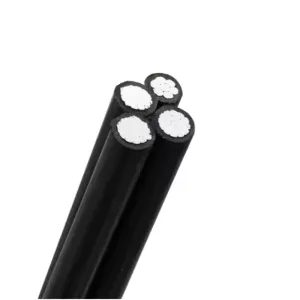
Low Voltage Aerial Bundled Cable (ABC) , 4-Core, AAAC Conductor, XLPE Insulated, Black UV-Resistant LLDPE Sheathed, 0.6/1kv, 4X70mm²
Их классификация: Верхние изолированные линии проводамнения: 314номер:Время выпуска: 2025-09-02 09:21:46Low Voltage Aerial Bundled Cable (ABC) is a specialized power transmission solution widely utilized in low-voltage distribution networks, and the variant defined by the specifications—4-Core, AAAC Conductor, XLPE Insulated, Black UV-Resistant LLDPE Sheathed, 0.6/1kV, 4X70mm²—stands out for its tailored design to meet the demands of reliable, long-lasting, and safe electricity supply in both urban and rural settings. This cable integrates high-performance materials and structural optimizations, making it a preferred choice for utilities, industrial facilities, and residential areas where aerial installation (e.g., along utility poles) is required, and resistance to environmental stress, mechanical impact, and electrical faults is critical. Core Design and Conductor: AAAC (All-Aluminum Alloy Conductor) At the heart of this ABC cable is its 4-core configuration with AAAC conductors, each sized at 70mm² (denoted as 4X70mm²). AAAC, or All-Aluminum Alloy Conductor, is selected for its superior combination of mechanical strength, corrosion resistance, and lightweight properties—key advantages over traditional pure aluminum or copper conductors. Unlike pure aluminum, which can suffer from fatigue or creep under long-term tension (a common issue in aerial installations where cables are suspended between poles), AAAC is alloyed with elements like magnesium and silicon. These alloys enhance the conductor’s tensile strength, allowing it to withstand the mechanical stress of aerial deployment (e.g., wind loads, self-weight) without premature sagging or breakage. Additionally, AAAC exhibits excellent corrosion resistance, making it suitable for harsh environments such as coastal areas (where saltwater spray accelerates corrosion) or industrial zones (with high levels of pollutants). The 70mm² cross-sectional area per core is a deliberate choice to balance current-carrying capacity and installation efficiency. A 70mm² conductor can safely transmit high levels of low-voltage current (compatible with the 0.6/1kV rating) while minimizing electrical resistance—this reduces energy loss during transmission, a critical factor for utilities aiming to improve grid efficiency and lower operational costs. The 4-core design further enhances functionality: it typically includes three phase conductors (for three-phase power distribution, the standard in most industrial and residential grids) and one neutral conductor, eliminating the need for separate neutral wires and simplifying installation. This bundled structure also reduces the risk of phase-to-phase faults, as the cores are insulated and sheathed together, preventing accidental contact between live conductors. Insulation: XLPE (Cross-Linked Polyethylene) Each conductor in the cable is insulated with XLPE (Cross-Linked Polyethylene), a material renowned for its exceptional electrical, thermal, and chemical performance in low-voltage applications. XLPE is created by cross-linking polyethylene molecules through chemical or radiation processes, which transforms the material from a thermoplastic (meltable under heat) to a thermoset (heat-resistant and dimensionally stable). This cross-linking gives XLPE several advantages over traditional insulation materials like PVC (polyvinyl chloride): First, XLPE has a high dielectric strength, meaning it can withstand the 0.6/1kV voltage rating of the cable without electrical breakdown. The 0.6/1kV rating indicates that the cable is designed for a maximum phase-to-earth voltage of 0.6kV and a phase-to-phase voltage of 1kV—standard for low-voltage distribution networks that supply power to homes, small businesses, and light industrial facilities. XLPE’s dielectric properties also minimize leakage current, further reducing energy loss and enhancing the cable’s safety. Second, XLPE offers excellent thermal resistance. It can operate at higher temperatures (typically up to 90°C for continuous use, with short-term overload capabilities up to 130°C) compared to PVC, which degrades at around 70°C. This thermal stability allows the cable to handle temporary current surges (e.g., during peak electricity demand in summer or winter) without insulation damage, extending its service life. Additionally, XLPE is resistant to moisture, oils, and most chemicals, ensuring it remains effective even in humid or polluted environments—such as agricultural areas where fertilizers or pesticides might come into contact with the cable, or urban areas with exposure to rain and dust. Sheathing: Black UV-Resistant LLDPE (Linear Low-Density Polyethylene) The entire 4-core assembly is encased in a black UV-resistant LLDPE sheath, a critical component for aerial installations where the cable is exposed to direct sunlight and outdoor elements. LLDPE (Linear Low-Density Polyethylene) is a flexible, durable thermoplastic that provides mechanical protection to the insulated conductors, shielding them from physical damage (e.g., impacts from tree branches, birds, or accidental contact during maintenance) and environmental wear. The “UV-resistant” modification is particularly vital: sunlight contains ultraviolet (UV) radiation that degrades most polymers over time, causing them to become brittle, crack, and lose their protective properties. Without UV resistance, an aerial cable’s sheath would deteriorate within a few years, exposing the insulated conductors to moisture, dust, and damage—leading to electrical faults, power outages, or safety hazards (e.g., electric shocks). The black color of the sheath further enhances UV protection by absorbing UV rays rather than reflecting them, reducing the amount of radiation that penetrates the material. Beyond UV resistance, LLDPE sheathing offers excellent flexibility, which simplifies installation. Aerial cables often need to be bent or routed around utility poles, trees, or other obstacles, and LLDPE’s flexibility allows for easy handling without cracking. It is also lightweight, which reduces the overall weight of the cable—an important consideration for aerial installations, as heavier cables require stronger support structures (e.g., thicker utility poles or additional brackets), increasing installation costs. LLDPE is also resistant to water absorption, ensuring that moisture does not seep into the cable even during heavy rain or flooding, which could otherwise cause insulation failure or corrosion of the AAAC conductors. Applications and Performance Advantages This ABC cable variant is ideally suited for a wide range of low-voltage distribution scenarios, thanks to its integrated design and material choices. In rural areas, where power lines often span long distances and are exposed to harsh weather (e.g., strong winds, heavy snow, or intense sunlight), the cable’s AAAC conductors (tension-resistant, corrosion-proof) and UV-resistant LLDPE sheath (weatherproof) ensure reliable performance with minimal maintenance. In urban areas, its compact 4-core design reduces the need for multiple separate cables, saving space on utility poles and reducing visual clutter—an important consideration for cities aiming to improve aesthetic appeal. It is also used in industrial facilities, such as manufacturing plants or warehouses, where low-voltage power is required for machinery and equipment, and the cable’s XLPE insulation and LLDPE sheathing can withstand the industrial environment’s dust, vibration, and occasional chemical exposure. Overall, this Low Voltage ABC Cable (4-Core, AAAC, XLPE Insulated, UV-Resistant LLDPE Sheathed, 0.6/1kV, 4X70mm²) delivers a balance of safety, efficiency, and durability. Its components are carefully selected to address the unique challenges of aerial low-voltage distribution—from mechanical stress and UV radiation to electrical overloads and environmental corrosion—making it a reliable solution for modern power grids. By minimizing energy loss, reducing maintenance needs, and ensuring long-term performance, this cable helps utilities and end-users maintain a stable, safe, and cost-effective electricity supply. -
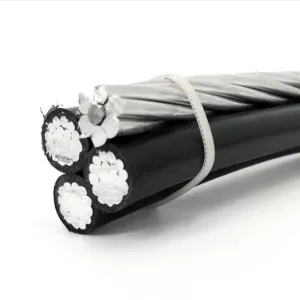
Low Voltage ABC Cable, 4 Core, Aluminum Conductor, XLPE Insulated, 10/16/35/50/70 mm²
Их классификация: Верхние изолированные линии проводамнения: 335номер:Время выпуска: 2025-09-03 05:56:32The Low Voltage ABC (Aerial Bundled Cable) with 4 cores, aluminum conductors, XLPE insulation, and conductor sizes ranging from 10 to 70 mm² is a versatile, high-performance solution engineered for modern low-voltage power distribution networks. Designed to meet the demands of residential, commercial, and light industrial applications—where reliable, safe, and cost-effective power delivery is critical—this cable combines structural efficiency, material durability, and flexibility in conductor sizing to adapt to diverse load requirements. By dissecting its core components, performance attributes, and application versatility, this summary highlights why it has become a go-to choice for utilities, electrical contractors, and infrastructure developers navigating low-voltage overhead distribution challenges. At the heart of this cable’s adaptability is its range of conductor sizes: 10, 16, 35, 50, and 70 mm²—each tailored to specific current-carrying needs. This sizing diversity ensures the cable can address everything from small-scale residential loads to medium-density commercial demand. For instance, the 10 mm² conductor, with an ampacity of approximately 50–60 amps (at 30°C ambient temperature), is ideal for powering individual homes or small apartments with modest energy needs (e.g., basic appliances, lighting). The 16 mm² variant, with an ampacity of 65–75 amps, suits multi-dwelling units (MDUs) or small retail stores. As the size increases, so does the load capacity: the 35 mm² conductor (100–120 amps) powers commercial complexes like strip malls or office buildings, while the 50 mm² (130–150 amps) and 70 mm² (160–180 amps) options cater to light industrial facilities—such as workshops, warehouses, or manufacturing plants with heavy machinery (e.g., small assembly lines, HVAC systems). This scalability eliminates the need for multiple cable types across a project, simplifying inventory management and installation planning for contractors. The 4-core configuration is another defining feature, optimized for three-phase four-wire (3P+N) low-voltage systems—the standard for balanced power distribution in commercial and industrial settings, and increasingly common in modern residential developments. The four cores include three phase conductors (L1, L2, L3) and one neutral conductor (N), creating a complete, self-contained circuit. This design ensures balanced current distribution, minimizing voltage fluctuations that can damage sensitive equipment (e.g., computers, medical devices in small clinics). Unlike 3-core cables that require external grounding, the integrated neutral conductor enhances safety by providing a dedicated return path for unbalanced current, reducing the risk of electrical faults or shocks. The 4-core structure also streamlines installation: instead of stringing separate phase and neutral wires, contractors deploy a single bundled cable, cutting labor time by 30–40% compared to traditional overhead systems. The aluminum conductor material is a strategic choice, balancing performance, cost, and practicality for overhead applications. Aluminum offers a superior strength-to-weight ratio compared to copper—approximately 30% lighter while maintaining 61% of copper’s electrical conductivity. For overhead cables, this lighter weight translates to reduced mechanical stress on utility poles and support structures, extending their lifespan and lowering maintenance costs. For example, a 70 mm² aluminum conductor weighs roughly 0.2 kg/m, compared to 0.6 kg/m for a copper conductor of the same size—easing handling during installation and reducing pole load. Aluminum is also 40–50% more cost-effective than copper, making the cable an economical option for large-scale projects (e.g., new residential subdivisions, industrial parks) without compromising on current-carrying capacity. Modern aluminum conductors in this cable are treated with anti-corrosion coatings (e.g., zinc or aluminum oxide), addressing historical concerns about oxidation. This coating ensures durability in diverse environments, from humid coastal areas to dusty inland regions, with a typical conductor lifespan of 25–30 years. The XLPE (cross-linked polyethylene) insulation further elevates the cable’s performance and reliability, making it suitable for harsh low-voltage overhead conditions. Unlike traditional insulation materials like PVC (polyvinyl chloride), XLPE undergoes a cross-linking process (via chemical, radiation, or silane methods) that forms a three-dimensional polymer network. This structural change delivers exceptional thermal, electrical, and mechanical properties: XLPE has a continuous operating temperature range of -40°C to 90°C, far wider than PVC’s 0°C to 70°C. This allows the cable to perform reliably in extreme climates—from freezing northern winters to hot, arid summers—without insulation degradation. It also exhibits superior dielectric strength (20 kV/mm) and low dielectric loss (tan δ < 0.001 at 50Hz), ensuring minimal energy loss during transmission and reducing the risk of short circuits caused by electrical breakdown. XLPE is highly resistant to water absorption (≤0.1% after 24 hours of immersion), UV radiation, and common environmental pollutants (e.g., dust, oils), making it ideal for outdoor overhead use. The insulation thickness, calibrated to each conductor size (e.g., 1.0 mm for 10 mm², 1.4 mm for 70 mm²), meets international low-voltage standards (e.g., IEC 60502-1, ANSI/ICEA S-94-649), guaranteeing compliance with global safety and performance benchmarks. In terms of applications, this cable’s versatility shines across multiple sectors. In residential areas, the 10–16 mm² variants power single-family homes, townhouses, or MDUs, where their compact bundled design fits easily on utility poles in dense neighborhoods. The XLPE insulation’s UV resistance ensures longevity in sunny climates, while the aluminum conductors’ light weight reduces pole strain. In commercial settings, the 35–50 mm² sizes serve strip malls, office buildings, and retail centers, supporting balanced three-phase power for lighting, HVAC, and point-of-sale systems. The 4-core configuration prevents voltage drops during peak hours (e.g., Black Friday sales in retail), ensuring uninterrupted business operations. In light industrial environments, the 50–70 mm² conductors handle the higher loads of workshops, small manufacturing facilities, or logistics hubs—powering machinery, conveyor belts, and inventory management systems. The cable is also used in rural electrification projects, where its overhead design and corrosion-resistant materials withstand harsh rural conditions (e.g., strong winds, heavy rain), connecting remote communities to the grid. Installation and maintenance benefits further enhance its appeal. The ABC design (aerial bundled) eliminates the need for separate bare conductors and external support wires, reducing clutter on utility poles and lowering the risk of damage from vegetation or wildlife. Installation is streamlined: the bundled cable is strung between poles using standard overhead tools (e.g., tensioners, pulleys), with no need for specialized equipment. Maintenance requirements are minimal: XLPE insulation does not require periodic re-treatment (unlike rubber or paper insulation), and the anti-corrosion aluminum conductors need only annual visual inspections to check for signs of wear. Routine tests—such as insulation resistance checks (using a megohmmeter) or tension adjustments—can be completed quickly, minimizing downtime and maintenance costs. Compliance with international standards ensures global applicability. The cable meets IEC 60502-1 (for low-voltage power cables with extruded insulation) and ANSI/ICEA S-94-649 (for aerial bundled cables), undergoing rigorous testing for voltage withstand, thermal cycling, and mechanical strength. For example, it passes a 5-minute voltage withstand test at 2.0 kV (phase-to-neutral) and 3.0 kV (phase-to-phase), confirming its ability to handle voltage surges. It also undergoes thermal cycling tests (from -20°C to 90°C) to ensure performance in temperature extremes. These certifications simplify approval processes for cross-border projects, making the cable a reliable choice for global contractors. In conclusion, the Low Voltage ABC Cable, 4 Core, Aluminum Conductor, XLPE Insulated, 10/16/35/50/70 mm² is a flexible, durable, and cost-effective solution for low-voltage overhead power distribution. Its range of conductor sizes adapts to diverse loads, the 4-core design supports balanced three-phase systems, aluminum conductors offer weight and cost advantages, and XLPE insulation ensures longevity in harsh environments. Whether powering homes, commercial spaces, or light industrial facilities, this cable delivers the reliability and versatility needed to meet modern low-voltage distribution demands—solidifying its role as a cornerstone of efficient, safe electrical infrastructure.
новости
классификация:
Нет результатов поиска!
случай
классификация:
Нет результатов поиска!
видео
классификация:
Нет результатов поиска!
скачать
классификация:
Нет результатов поиска!
вербовка
классификация:
Нет результатов поиска!
Рекомендуемые продукты
Нет результатов поиска!



 телефон
 почтовый ящик